
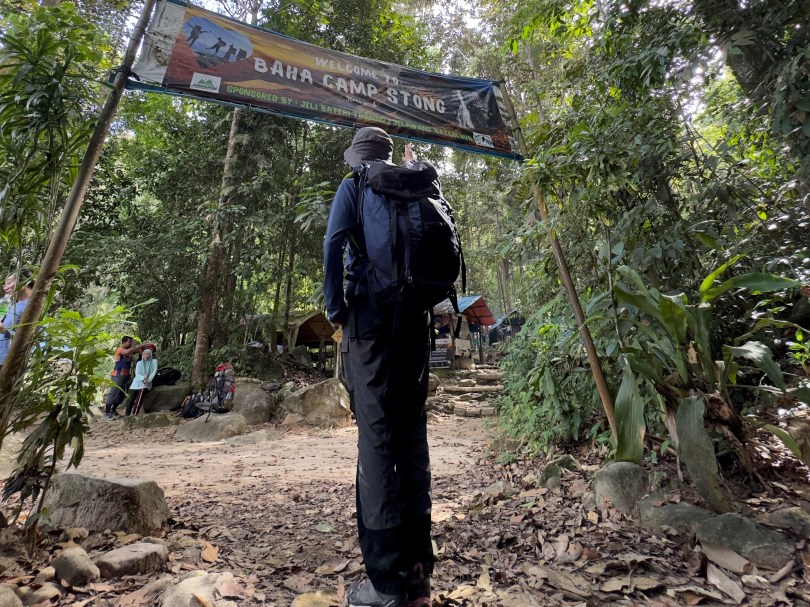
If you want to experience waking up to a breathtaking sunrise on the ridge of Southeast Asia’s highest recorded waterfall, then you should try a 3D2N camping trip at Baha Campsite, Dabong.
It’s a clean, well-kept site complete with toilets and a small surau with ice-cold water running straight from a small waterfall right next to the camp, which honestly makes the whole process of enjoying nature surprisingly comfortable. You can just spend hours lying in your hammock, enjoying the morning mist wrapped among the tall trees while listening to the gentle roar of the falls. And if you’re lucky with the weather, you’ll get to witness a soft layer of awan karpet settling over the valley below.
- Location: Baha Campsite, Dabong, Kuala Krai, Kelantan (450m)
- How to go: Drive to Dabong, use Waze for “Stong Heritage Eco Resort”. Another option is to take a train from KL Sentral to Gemas (ETS) and Gemas to Dabong (KTM) to experience a different adventure.
- Attraction: Camping and watching sunrise from the ridge of Jelawang Waterfall, the tallest waterfall (recorded on paper) in southeast Asia
- Difficulty: Moderate and steep, vertical hiking
- Distance: 2-3 hours hike with load. 3.4km long
- Time spent: 3 days 2 nights
- Caution: Not advisable during raining season
- Tips: Arrange food ration with your guide so you can focus being in the moment
- Leech level: High
- Entrance Fee: Yes
- Require Permit: Yes
- Local Guide: PakDo +6017 908 0884
- Hiking date: 01.05.2025
Before COVID-19 and the lockdowns, Dabong was a quiet little secret.
Hidden deep in the heart of Kelantan, only a few people really knew about it. But once local travel opened up again, people started looking for green escapes, and Dabong suddenly became a favorite spot for nature lovers.
To get there, you basically have two choices.
You can take the easy way by driving or catching a long-distance bus on the highway. Or, you can choose a slow, classic adventure: riding the historic jungle train from Gemas all the way to Dabong. The Dabong train station has been standing since 1931. It was built during British colonial times as part of the main rail line linking Gemas in the south to Tumpat up north Malaysia’s east coast line. Long before smooth paved roads were built through these mountains, this railway was the only real lifeline connecting small rural villages to the rest of the country.
To be honest, I usually prefer driving. I like being in control of the road. But I kept reminding myself to always say ‘yes’ to something different. “I really should try this iconic old train route before modernization changes it forever”, I told myself.
“Let’s do this!” I told Zura and Sarah, and we booked our tickets on impulse.
Of course, because we booked last minute, the cozy sleeping berths were completely full. People usually book those months in advance, so we had to settle for regular seats instead.
Our journey started late at night as we caught a train from KL Sentral to Gemas. Around 01:00 AM, half-asleep and stumbling through the dark, we transferred onto the classic Gemas-to-Dabong train.
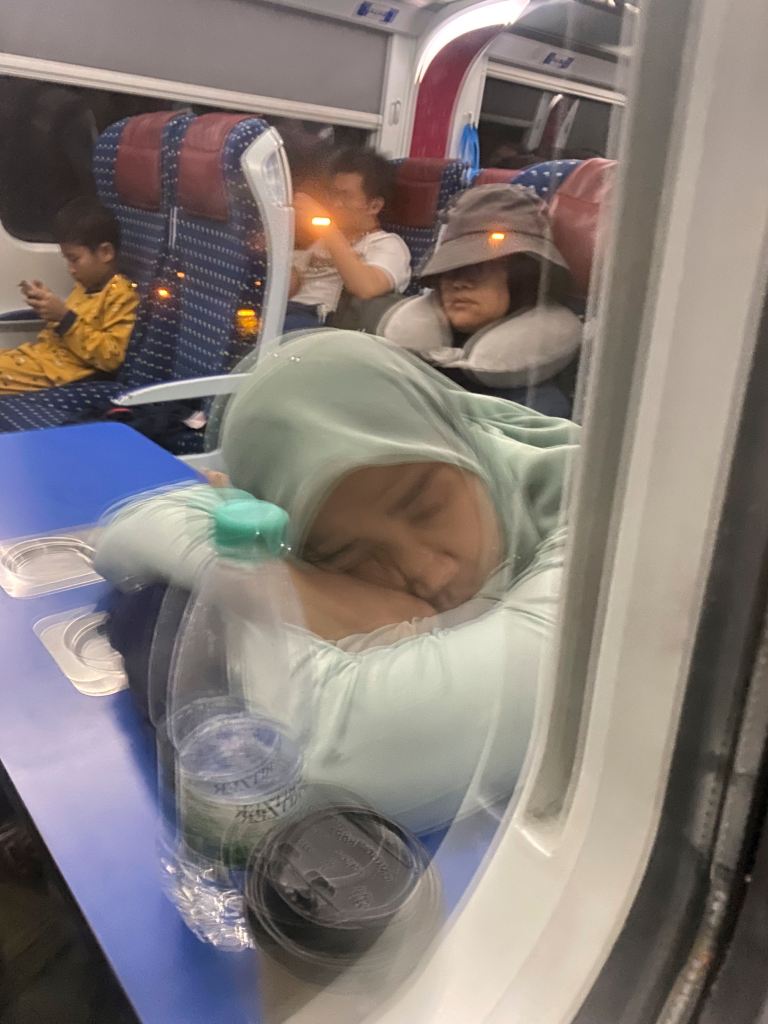
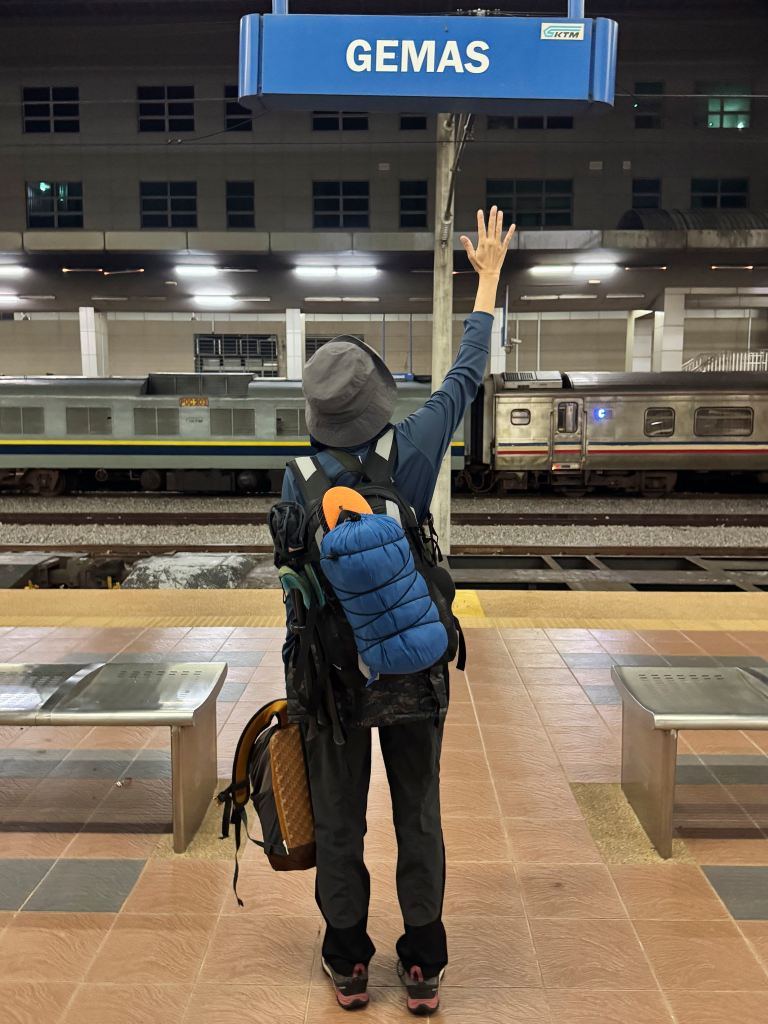
Wah, riding in that authentic, vintage KTM carriage was quite an experience!
The seats were hard, stiff, and definitely not designed for human sleep (or is it just me who can no longer tolerate discomfort). On top of that, the loud clack-clack-clack of the metal wheels hitting the steel rails was impossible to ignore. I couldn’t shut my mind and rest. But honestly? Trading one night of good sleep for an adventure like this felt like a very fair deal.
Besides, as the soft morning light of Subuh began to break, the view outside turned into pure magic. Endless green forests, winding rivers, and a soft morning mist floating over the hills. Sitting in that gently rocking train carriage and watching the jungle wake up with the sunrise made every single minute of lost sleep totally worth it.
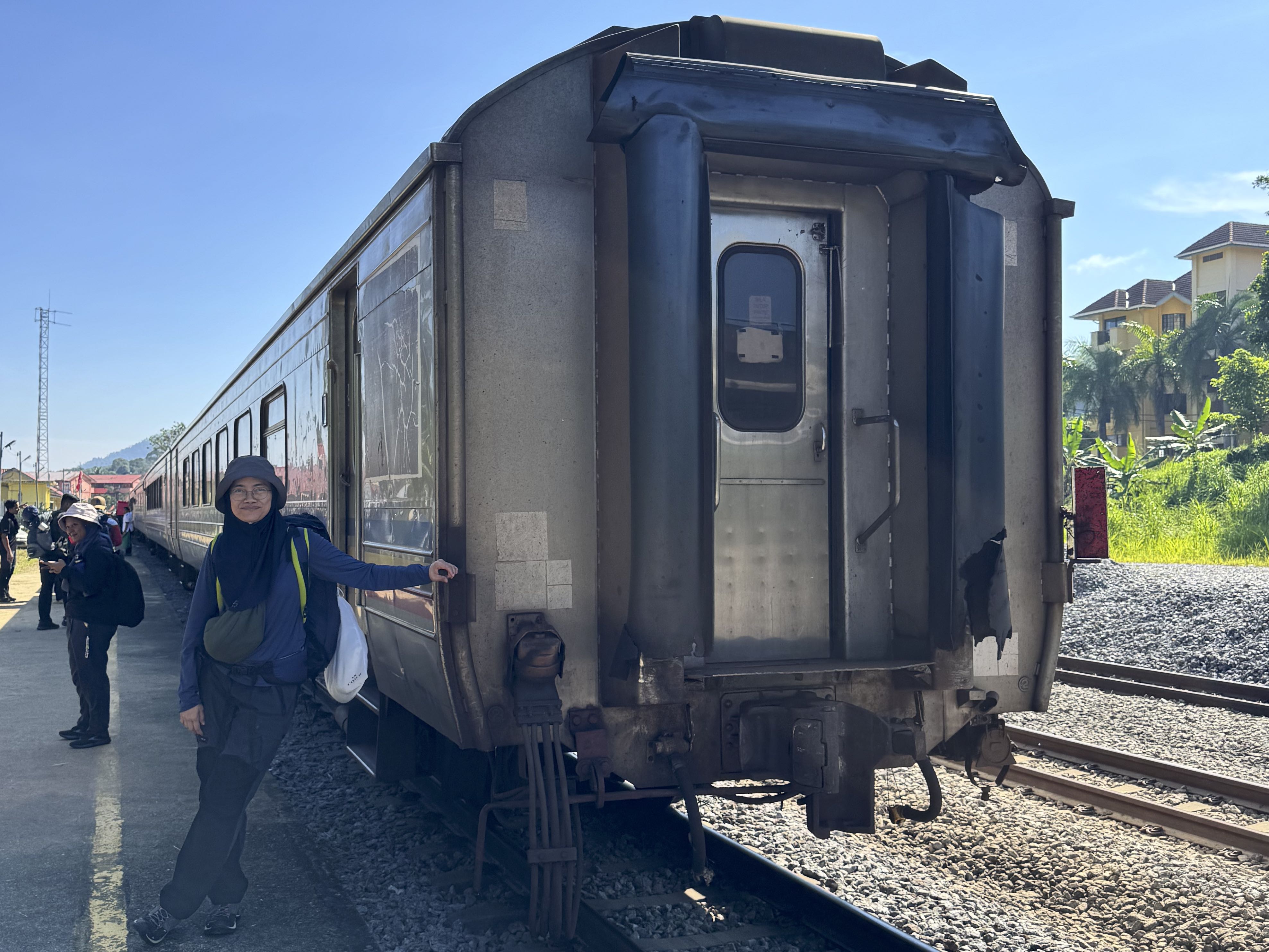
We pulled into Dabong station around 10:00 AM, where our guide was already there. After grabbing a quick breakfast and packing our lunch for the day, we drove straight to the entrance of Gunung Stong State Forest Park.
Ahead of us was a 2 to 3 hour hike (depending on individual body fitness) up to Baha Campsite. Perched at 450 meters above sea level right at the top of the mighty Jelawang Waterfall, the site has an interesting history. It was founded back in 1997 by the late Allahyarham Bahanuddin Hassan, fondly known as Pak Baha. It is from his nickname that “Baha Campsite” was born, laying the foundation for what has become one of the well known wilderness spots among our local adventurers.
We started our hike to Baha campsite at 01:00pm. The hike went surprisingly well even when I had minimal rest last night while on the train. I think the 3 day, 2 night load up slowed me up a bit but … I needed to finish whatever that I’ve started.
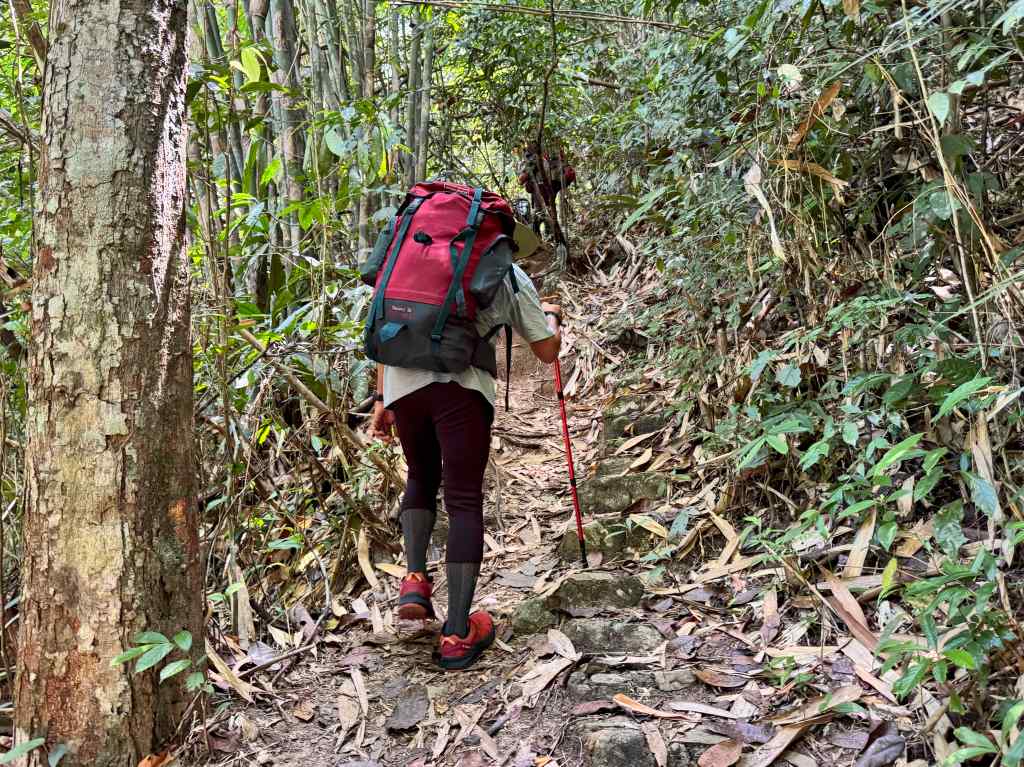
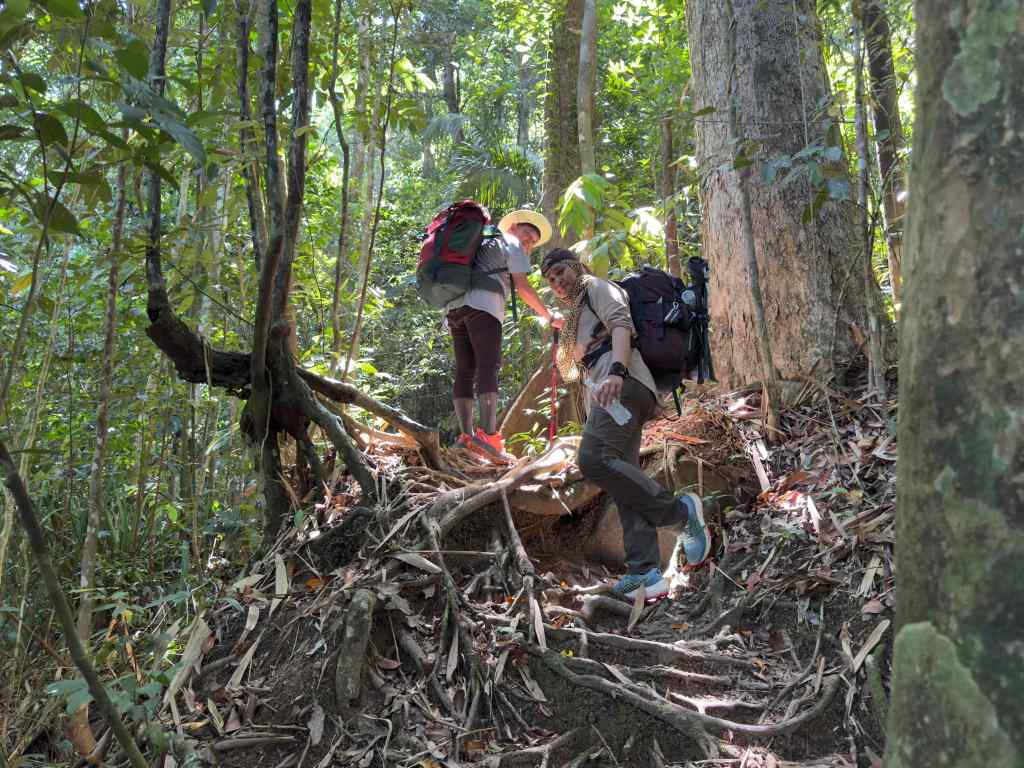
As I have gotten older, my shoulders simply are not built for lugging heavy 15 kilogram backpacks filled with bulky tents, thick sleeping gear, and endless food rations. The moment a strap starts digging painfully into my collarbones, the peaceful joy of nature quickly turns into a test of physical survival. I usually avoid overnight hikes for this exact reason, but there was no way I was missing out on an adventure with this group.
Fortunately, there is a beauty side of Baha Campsite for anybody who is willing to spent a bit more money for comfort. It offers wonderful flexibility in how you manage your heavy load. You can talk to your guide beforehand to customise your load. Want to pitch a classic tent? Go for it. Need a personal porter to carry your heavy gear? That is an option too. You can even ask your guide to handle meal preparations so you do not have to carry extra food supplies.
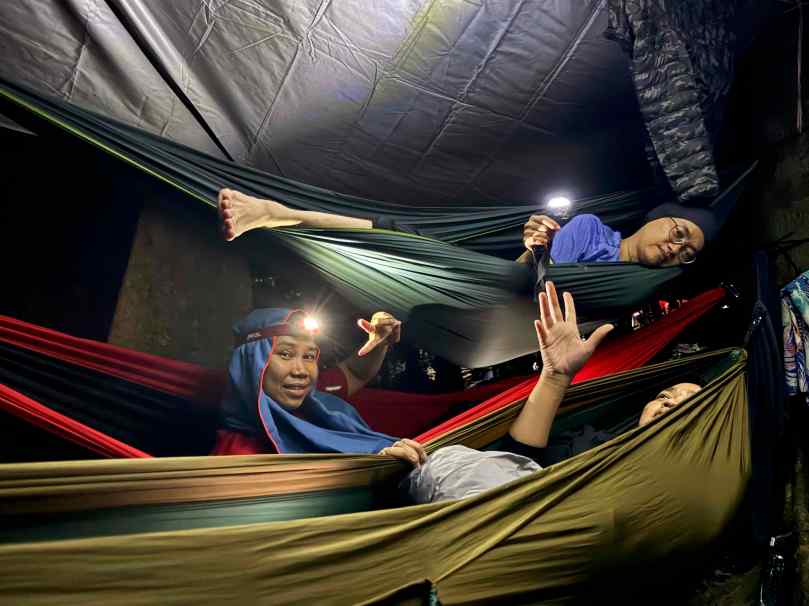
For me, choosing a hammock setup was convinient. By swapping a heavy, bulky tent for a lightweight hammock and tarp, I shaved off significant weight and saved my poor shoulders from unnecessary torture. There is simple, practical logic at work here: less weight on the trail up means more energy left to actually enjoy the scenery once you arrive.
And honestly? Hanging suspended between two sturdy trees, lifted off the damp forest floor with a cool mountain breeze flowing right beneath you, feels like the absolute smartest way to sleep in the jungle. It is light, simple, and lets you wake up without paying for the experience with an aching back!
So, why camp at Baha Campsite, and what is there to explore?
You could easily do a day hike: trek up early in the morning, enjoy the breathtaking sunrise above a sea of low clouds known as awan karpet, splash around in the stream near the waterfall, have lunch, and head back down. Or you could stay overnight, falling asleep to the constant, soothing soundtrack of running water and waking up to a second sunrise without any rush.
If you are feeling adventurous, you can sign up for the famous three peaks challenge. This involves conquering Gunung Baha, Gunung Stong, and Gunung Ayam, the three surrounding peaks of the Dabong mountain range. It is a legendary trail built for hardcore, seasoned hikers who move at lightning speed.
Knowing our own limits, the four of us, Zura, Sarah, Jai, and myself, took one look at that grueling itinerary and collectively agreed: absolutely not! We are definitely not ready for all three.
Instead, we played it smart and chose just one: Gunung Stong (1422m).
We set off from camp at 9:00 AM, pacing ourselves through the steep forest trails, and finally stood at the summit around 3:00 PM. After soaking in the views, we started our trek down, reaching Baha Campsite around 7:30 PM. A solid 10.5 hour round trip! Not bad for a team that prioritizes safety and comfort over speed.
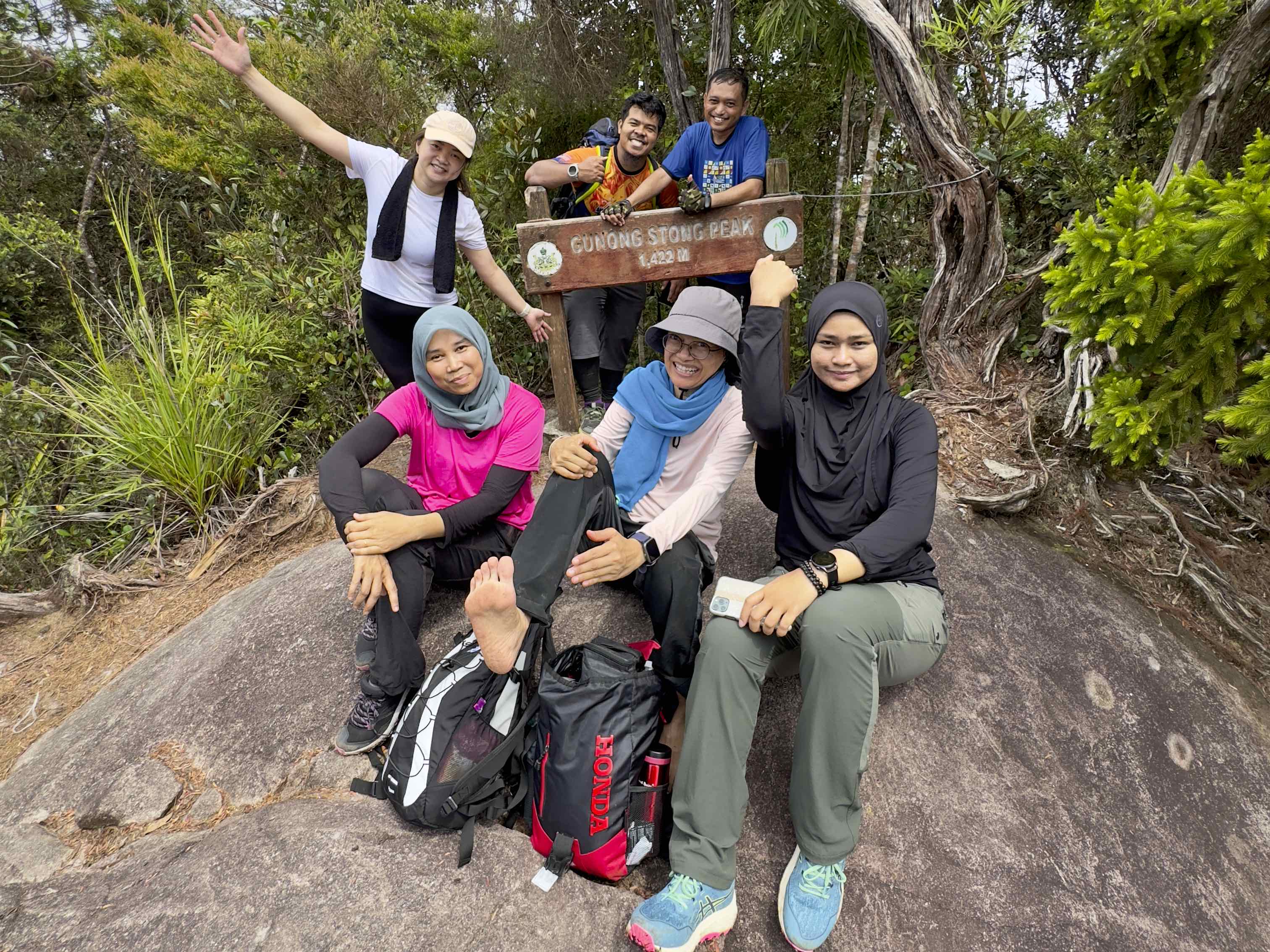
Throughout this trip, I realized that the four of us are completely on the same wavelength. None of us are the type who eagerly volunteer for camp chores like cooking or scrubbing dishes. We are dreamers aka lazy people, lol. We prefer spending hours jumping in and out of cold streams, watching the sunset, or just swinging loosely in our hammocks enjoying the moment. So when total exhaustion sets in after a 10 hour hike, even opening a gas stove feels like trying to solve a complex puzzle!
Despite our aching muscles, I deeply appreciated how safe and well managed Baha Campsite felt. Even though we returned after dark, we felt totally comfortable heading down to the stream at 8:30 PM for a night bath. There is something remarkably refreshing about taking a cold dip in the crisp, running water under a quiet night sky to soothe sore legs.
The only flaw in our evening plan was dinner. We brought food rations, but after hiking all day, none of us had the energy or patience left to cook. Wrangling stoves and waiting for water to boil when your body just wants to collapse is a special kind of fatigue.
It brought me to a very practical conclusion: when I come back to tackle all three peaks next time, because yes, there will be a next time, I am 100% paying my guide Pak Do to handle the meals for us. Some luxuries in the jungle are worth every single cent!
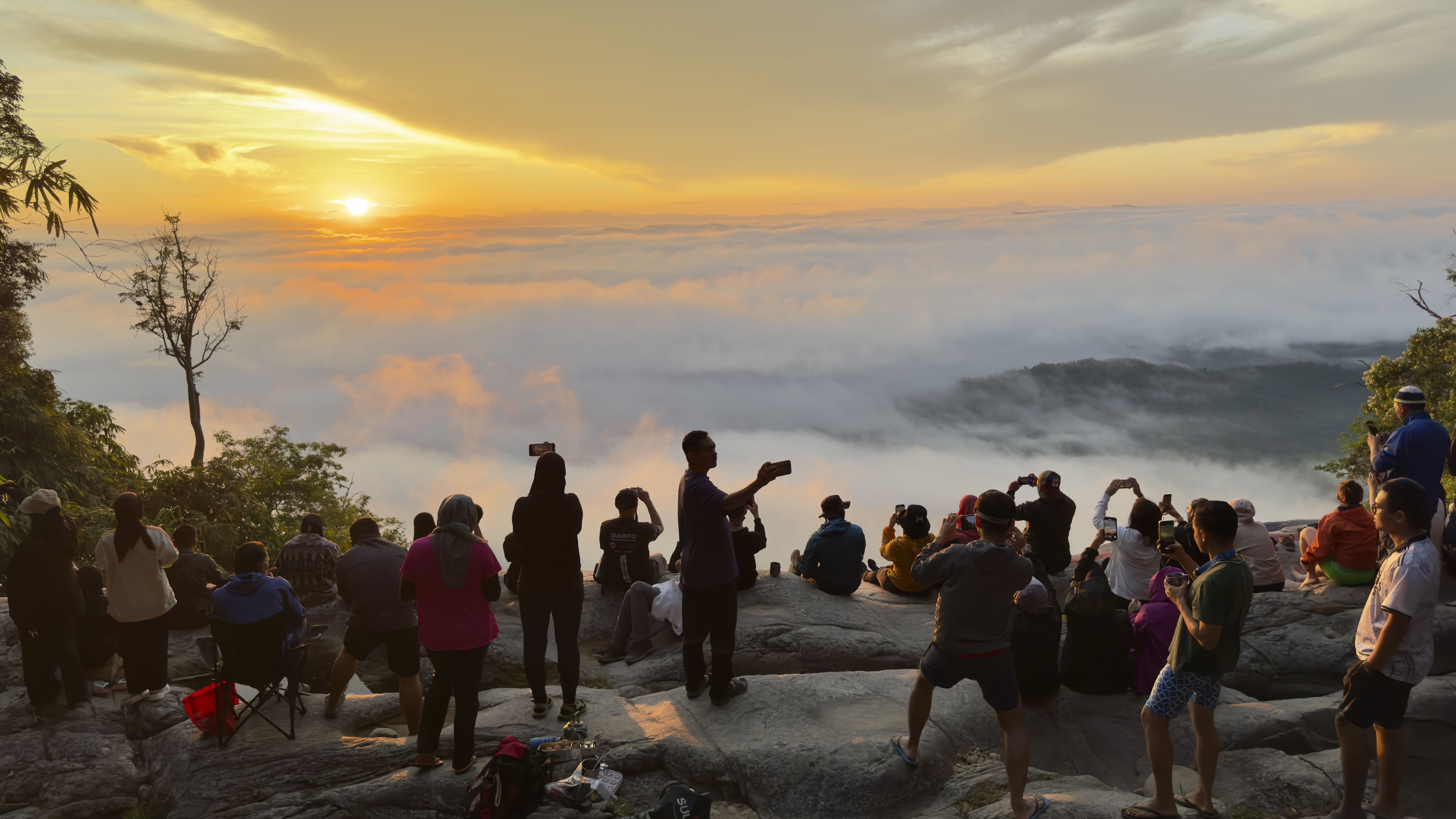
The next morning, I woke up to a gorgeous blanket of awan karpet floating across the valley at sunrise.
As the sun climbed higher, the thick mist drifted up into the trees surrounding our campsite. Suddenly, the campsite was completely wrapped in soft clouds. The air felt cold and humid, almost as if the campsite had been transported to a totally different corner of the planet. Living in nature like this feels like the absolute luxury to be alive, at least for me.
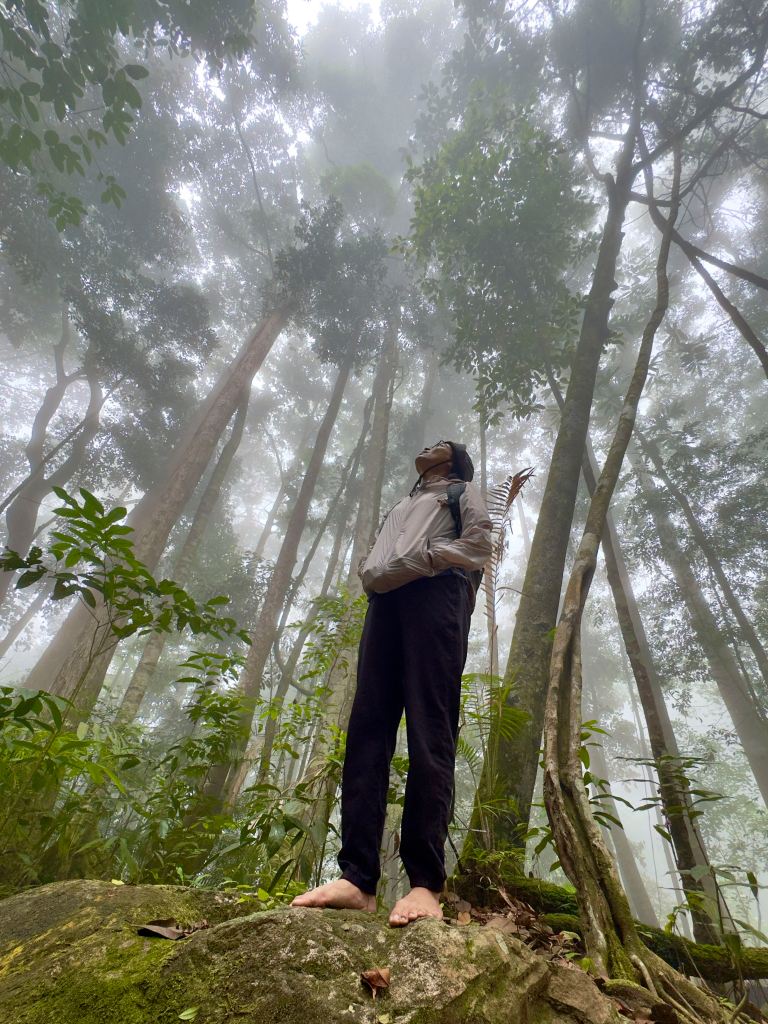
Of course, beneath all that wonder, our bodies were paying a very real physical tax.
Our legs and shoulders were still carrying every single minute of yesterday’s 10.5 hour trek up Gunung Stong. Sore, stiff muscles made even the simple task of packing up our gear feel like a slow motion ordeal. We managed to eat a quick breakfast, packed away our hammocks, and prepared to march down the mountain. The muscle pain was very real, but we spent the whole time laughing through it, teasing each other about our robot like walking styles.
For the descent, we took a different route than the forest trail we used on the way up.
Instead of heading back through the deep jungle canopy, our path led us right alongside Jelawang Waterfall. We had to cross massive, steep, and slippery granite rocks right at the edge of the rushing water. Balancing on wet stone with heavy packs while the roar of the waterfall echoed all around us was pure adventure, giving us a front row view of the falls before we crossed the river toward the trailhead.
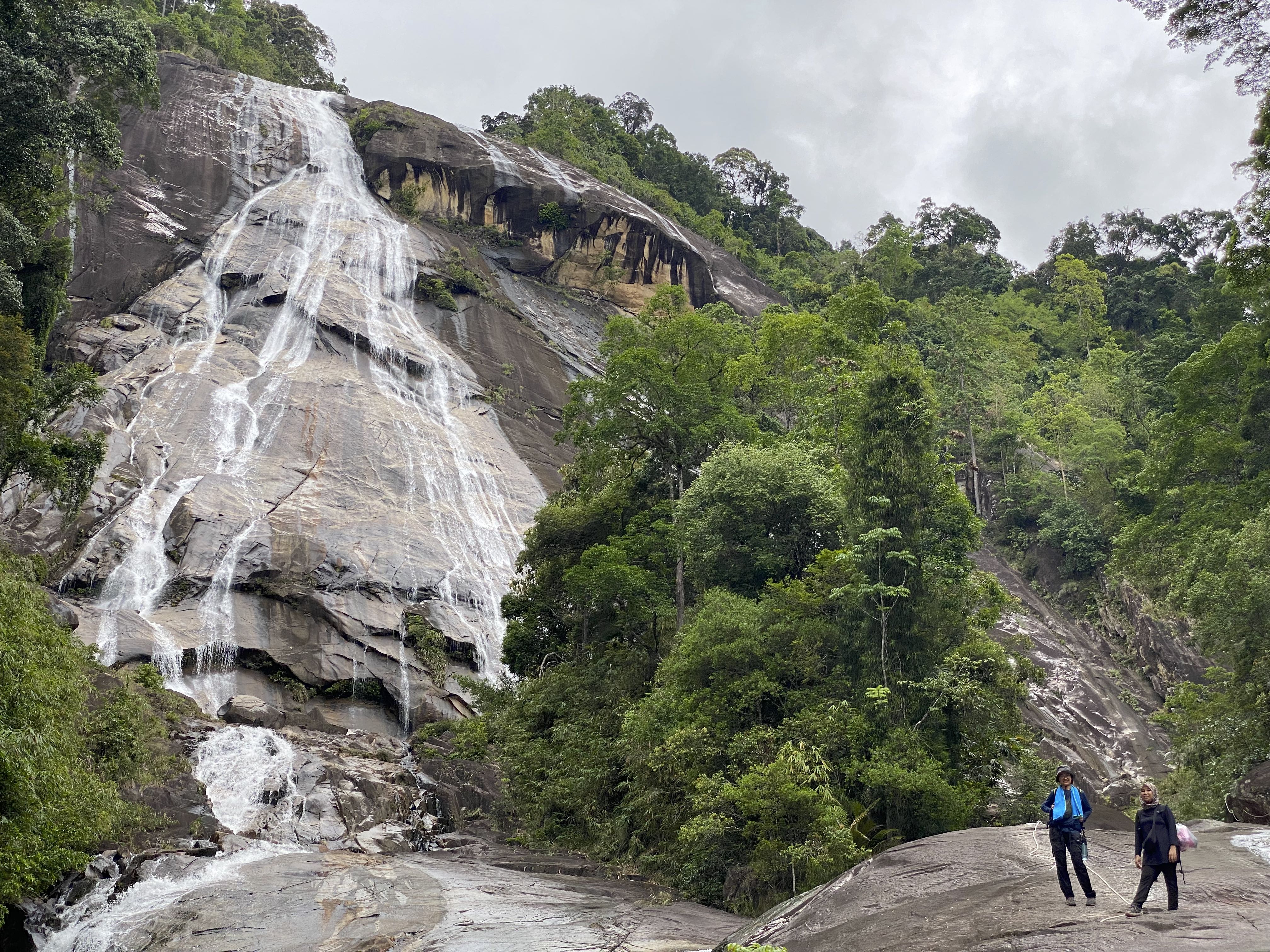
Standing back on flat ground at the entrance of Gunung Stong State Park, a stubborn thought kept nagging at me: 3 days and 2 nights is simply not enough for a place like this.
Malaysian hiking culture has made it normal to squeeze everything into a quick 3D2N trip (maybe due to the short weekend), but that forces you into a constant rush. You hike up, conquer a massive peak while already exhausted, and then immediately pack up the next morning without ever taking a moment to just sit still in the forest.
I am seriously thinking about starting a campaign to make the 4D3N getaway the new standard. Just look at the logic:
Day 1: A slow, easy hike up, setting up camp, getting used to the environment, and cooking without a ticking clock.
Day 2: Hitting the trails completely fresh for the 3 Peaks Challenge across Baha, Stong, and Ayam.
Day 3: Pure recovery and fun, swimming in cool streams, exploring Telaga Tujuh Waterfall, reading or lounging in a hammock, and enjoying the mist.
Day 4: Waking up refreshed to one last sunrise, enjoying a slow breakfast, and making a peaceful descent.
As someone who is not tied to the traditional 9 to 5 routine, I genuinely believe that if you want to feel nature instead of just checking off a bucket list, a 4D3N stay at Baha Campsite is not a luxury. It is the bare minimum standard our souls deserve.
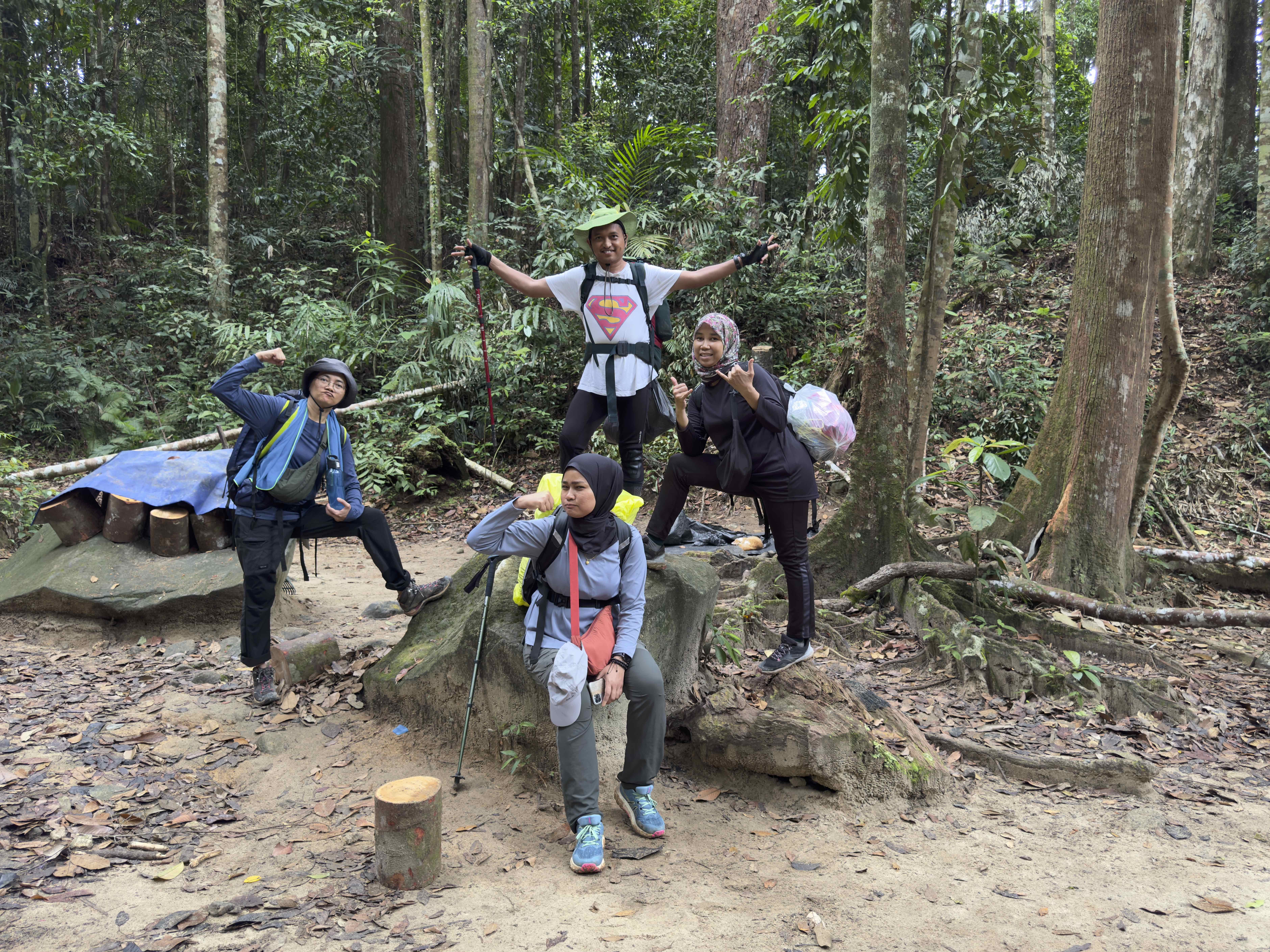
At the end of the day, Baha Campsite is not just a stopover or a sleepover.
It is a gentle reset for the mind and body. It gives you a front row seat to one of Southeast Asia’s highest recorded waterfalls, rewards you with dreamlike seas of clouds, and reminds you how sweet and grateful it feels to simply sit still.
Whether you go there to chase the intense three peaks challenge or just to float in a hammock with a hot cup of coffee, this place has a way of staying with you long after the dirt washes off your hiking shoes.
So give this place a try and share your experience with me. Take that historic train ride, trade the urban rush for a slower rhythm, and let the jungle do what it does best. Just do yourself a favour: book that extra night, hire the guide to handle dinner, and do not forget your hammock!
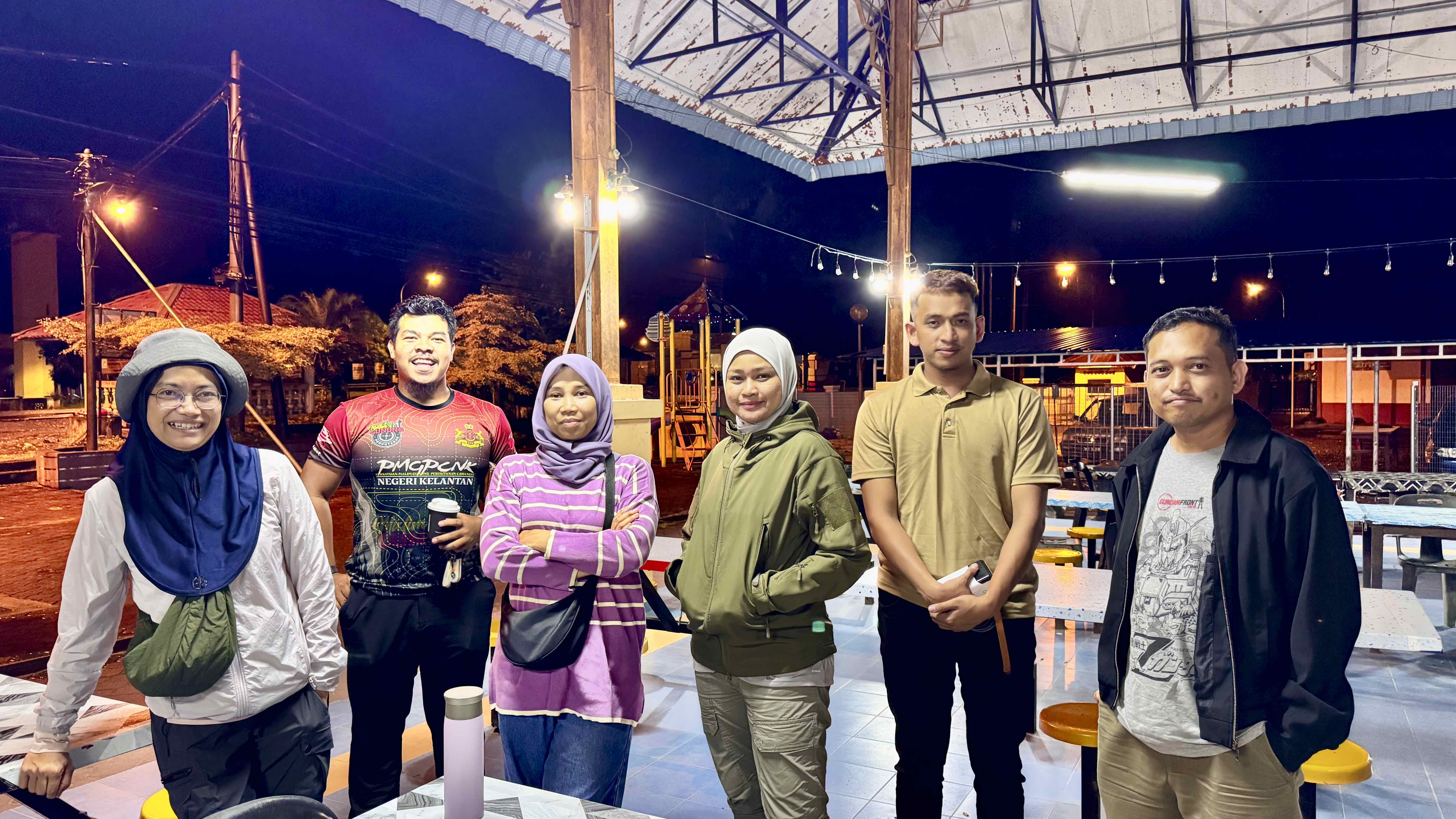
Good luck on your next hike gais!
Keep on moving 💪🏻.
Sally Matsuda

