
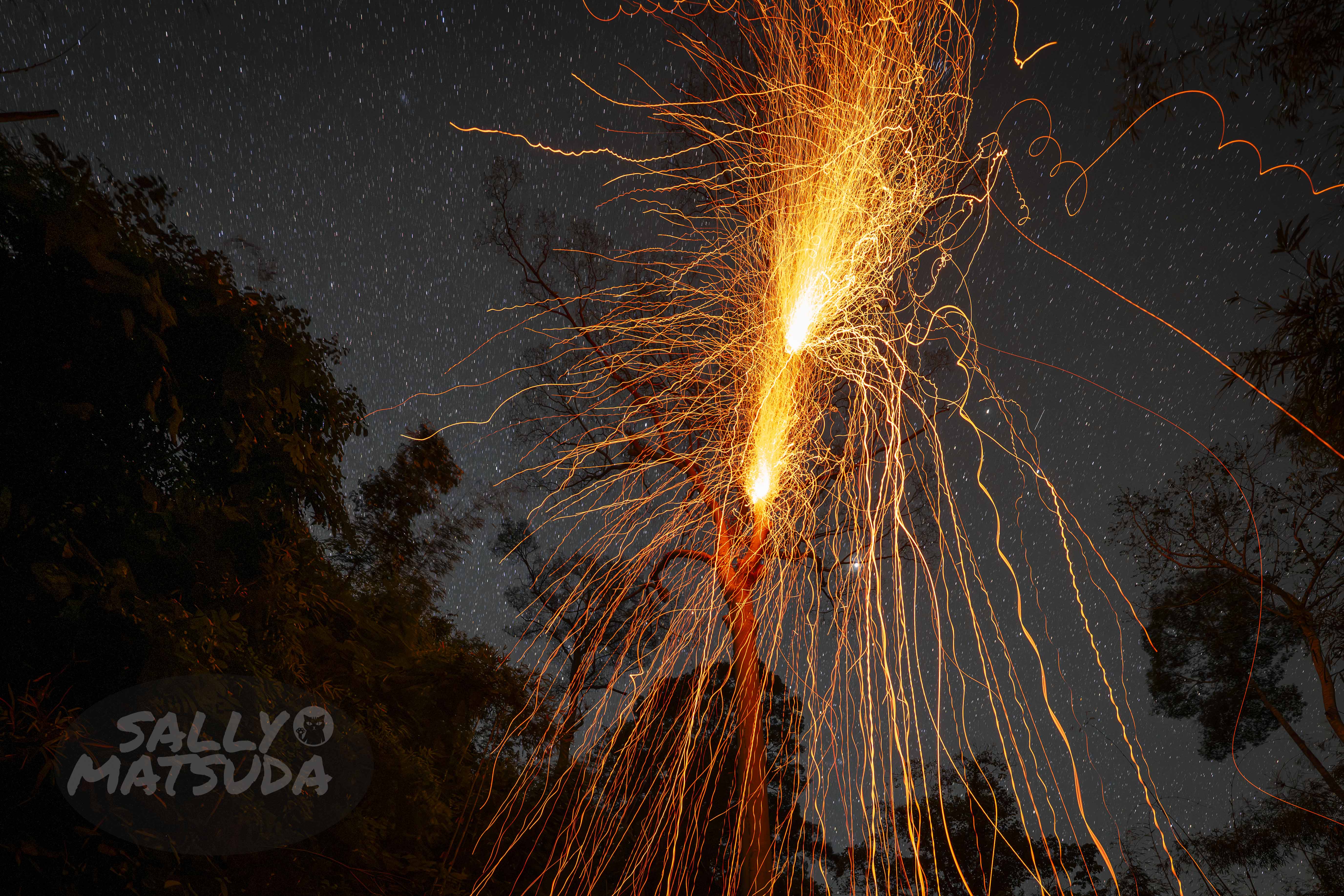
Sitting on the damp forest floor beside Zam, the leader of the Tasik Pedu honey gatherers, I watched a shower of golden embers burst from the Mentawan torch, drifting down through the dark Tualang canopy like falling stars.
In that quiet night air, a wild, ambitious thought struck me.
“Zam,” I whispered, my gaze fixed on the glowing canopy above. “Why can’t we just domesticate Apis dorsata? What if we put up wooden hive boxes on the high branches, run a high-altitude bee farm, and harvest honey all year round instead of waiting for the Pedu flowering season?”
Zam slowly turned his head. A dry, amused grin spread across his face. The exact look a veteran forest hunter gives a dreamer with overly creative ideas.
“Sally…” he chuckled softly. “You want to put a tiny wooden box out for a wild bee that owns the entire jungle canopy?”
Refusing to surrender my breakthrough, I answered with absolute confidence.
“Yeah, why not? Nothing is impossible, right? We just haven’t found the way yet.”
It was my defiant response to his skeptical grin. But as the embers faded into the darkness, I had to ask myself: was I actually onto a clever possibility, or was I fundamentally misunderstanding the wild mind of Apis dorsata?
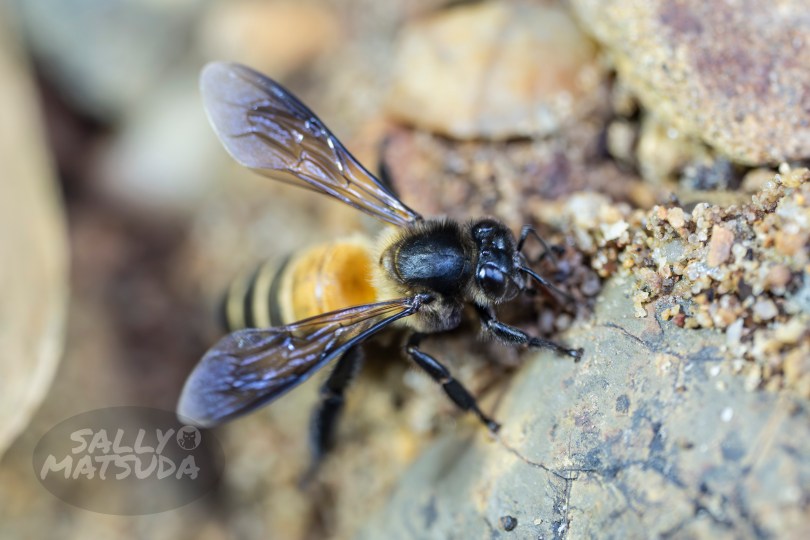
To understand why my “genius” high-altitude bee farm was wildly impractical, you have to look at the cold, hard numbers.
Globally, there are roughly 20,000 known species of bees. But 95% of them are antisocial freelancers: solitary bees who live alone, build zero hives, and produce precisely zero honey reserves. That leaves a remarkably small 5% of bees capable of making honey.
Zoom in on Malaysia, and the roster shrinks further.
We have five species of honeybees and one group of stingless bees, the kelulut. Out of these, humans have managed to domesticate exactly three: our native Apis cerana, our popular kelulut, and the imported European Apis mellifera. All are gentle, cooperative and content to live inside cozy, human-made boxes.
Meanwhile, our wild rainforest ecosystem is driven by three untamed species: Apis florea, Apis andreniformis, and the true giant of the rainforest canopy, Apis dorsata. While florea and andreniformis produce lovely honey, they yield it in tiny amounts, making them economically impractical to harvest for sale.
Most honey on commercial shelves comes from those polite, domesticated bees.
Apis dorsata, the Tualang bee, sits at the absolute top of the hierarchy.
Their honey is deeply prized, packed with high levels of natural antioxidants. From a purely economic standpoint, targeting Apis dorsata makes logical sense. They build massive, open-air combs that yield far more honey than their smaller, boxed relatives.
In my mind, the math was simple: find the best honey maker, give them a simple wooden box, and harvest honey all year. Pure business efficiency.
The flaw in my equation, however, was not the economics. It was a complete, comical misunderstanding of Apis dorsata biology.
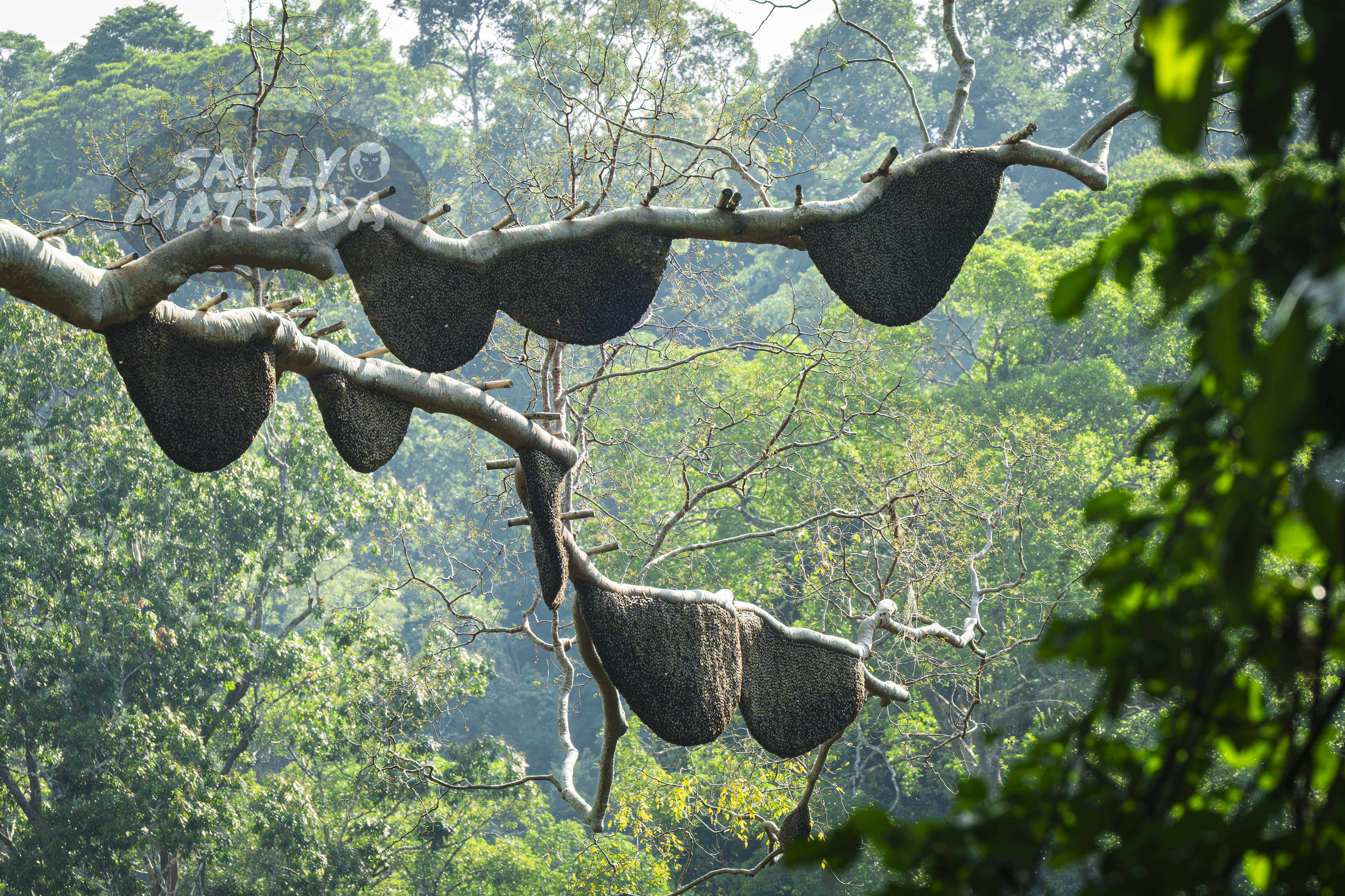
To understand why a wooden box will never work, you have to look at the sheer scale of how Apis dorsata builds its nest. Unlike domesticated bees that nest in cozy, enclosed cavities, Apis dorsata constructs a single massive open-air comb that can measure over a meter long, sometimes reaching up to two meters, hanging completely exposed beneath high branches.
Zam remembered the golden days of the 1980s, when the hives at Tasik Pedu were staggering. He told me single combs back then could grow as huge as a small car, with up to a hundred nests packed into a single Tualang tree.
You simply cannot squeeze a creature with that kind of architectonic vision into a four-cornered wooden crate.
Even if you managed to build a box big enough, you would run into a second problem: Apis dorsata is a born nomad. They do not stay in one place, and they certainly do not wait around dormant inside a box when the Pedu flowering season ends.
Instead, they operate like seasonal traveler following regional blossom trails across forests and mountains. The moment the local nectar runs out, they pack up the entire colony, abandon the empty comb, and vanish into the horizon to follow the flowering trees in neighbouring forests.
They do not work for humans; they follow the food.
My idea of “taming” them assumed the wild bee was waiting for a human landlord to improve its life. In reality, Apis dorsata already has a home. It just happens to stretch across the entire canopy of Southeast Asia.
The more I learned about the giant bees, the more obsessed I became.
I realized I needed to reassess my wild bee domesticating strategy. What if I brought my boxes of tame bees, maybe Apis cerana or the European Apis mellifera, and homed them in the middle of the Pedu Reserve forest instead?
Aha! Conventional wisdom says that great honey comes down to the flowers. The logic seems simple: the higher the quality of the floral nectar, the better the honey. So my new blueprint was set. I would drop my polite, boxed bees right into the heart of the Pedu jungle, let them forage on the exact same pristine Tualang blossoms as the wild giants, and harvest authentic, top-tier forest honey directly from neat, comfortable wooden drawers.
It sounded foolproof. But nature does not work that way.
What I failed to realize is that nectar is only half the equation. The honey’s final character—its depth, enzymatic complexity, moisture level, and richness—is shaped by the biology of the bee itself. Different species process nectar differently in their gut, express different natural enzymes, and cure their honey in entirely different hive environments.
Putting a suburban Apis mellifera or Apis cerana in the Pedu forest to replicate Madu Tualang is like putting a light commuter car on an off-road rally track. It would never be the same, and it would obviously break the gentle bees.
Domesticated bees were bred for mild climates and enclosed, dark spaces. Dropping them into a dense, high-humidity rainforest would not give me wild-grade honey; it would give me stressed, overwhelmed bees struggling against forest mold, tropical heat, and fierce local competitors.
Apis dorsata does not just collect nectar from the forest; their unique biology, open-air comb evaporation, and sheer physical scale are what transform that nectar into true Madu Tualang. You can change the scenery all you want, but you cannot fake the species.
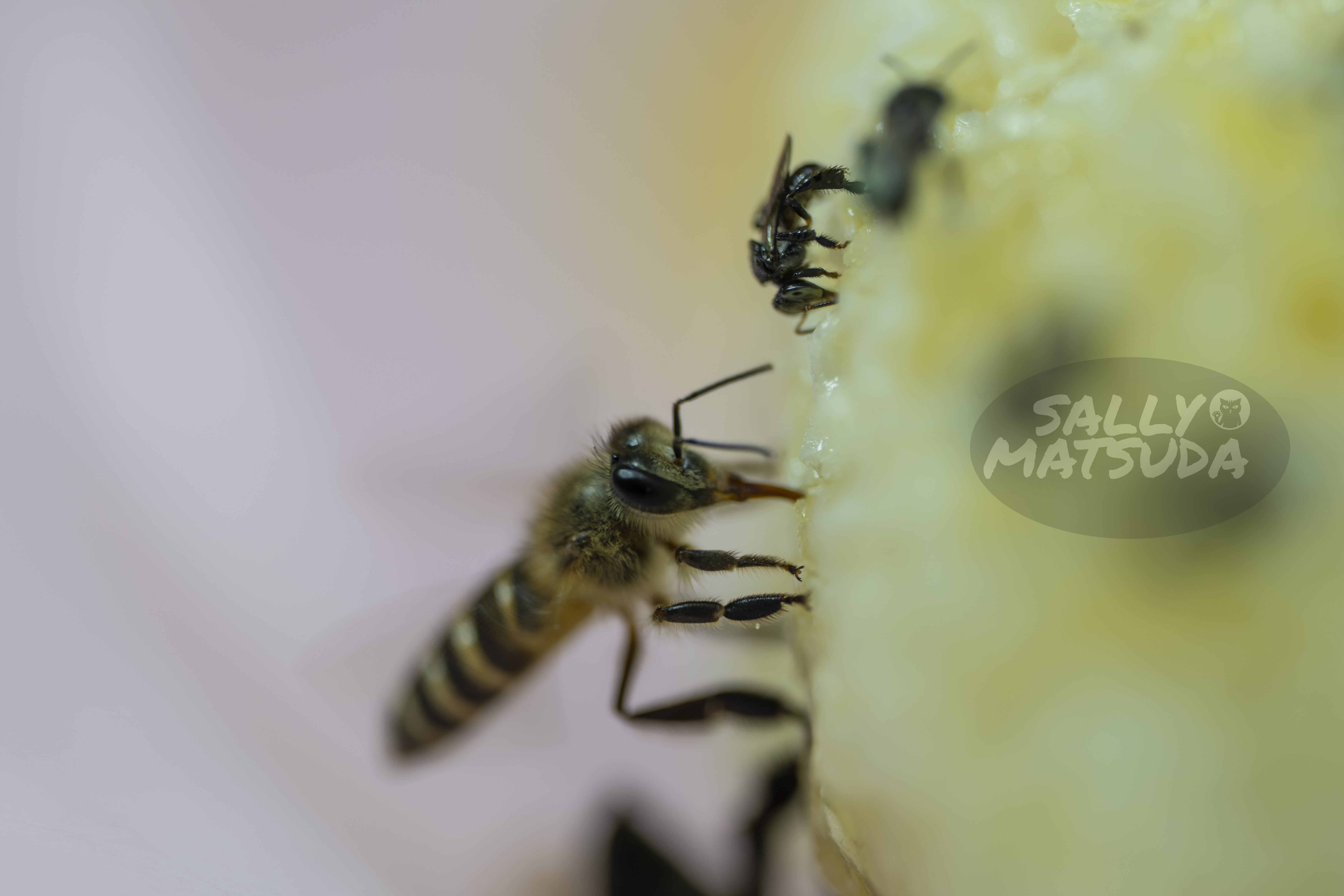
Beyond their migration habits and unique honey, there is one final reason why you do not try to manage Apis dorsata: their defense system.
If you walk up to a box of tame bees, a stray worker might buzz around your face to warn you off. If you ignore her, maybe two or three will sting. It is simple, a bit clumsy, and manageable.
Apis dorsata, on the other hand, operates on a highly structured collective intelligence.
When tens of thousands of giant bees sit shoulder-to-shoulder across a massive exposed comb, they do not just sit there idle. The moment a threat appears—a hunting hornet, a bird, or a foolish human stepping too close—the colony activates a brilliant defense trick called “shimmering.”
It is, quite literally, an insect stadium wave. I was lucky enough to capture this shimmering process through my 400mm lens, and seeing them move together like that was a total National Geographic moment for me.
In a fraction of a second, thousands of bees flip their abdomens upward in a perfectly timed ripple across the nest. To anyone watching, the entire hive transforms into a living, pulsating visual wave. It is a clever optical illusion, specifically designed to confuse a predator’s eyes and make them rethink their choices.
If that visual warning does not work, the colony’s natural instincts kick in. They do not send out solo defenders. The hive releases a quick alarm pheromone that calls up a fully coordinated team. A single disturbed hive can launch hundreds of giant bees in tight formation, tracking a target through thick jungle foliage for hundreds of meters.
Apis dorsata solved hive defense millions of years ago using pure instinct, chemical signals, and a simple, synchronized wave.
Sitting back and looking at the big picture, the reality finally set in. This was never a simple weekend project or something I could easily manage in a wooden box. I was just looking at a wild, ancient species that has always belonged to the forest, doing what it has done best for millions of years.
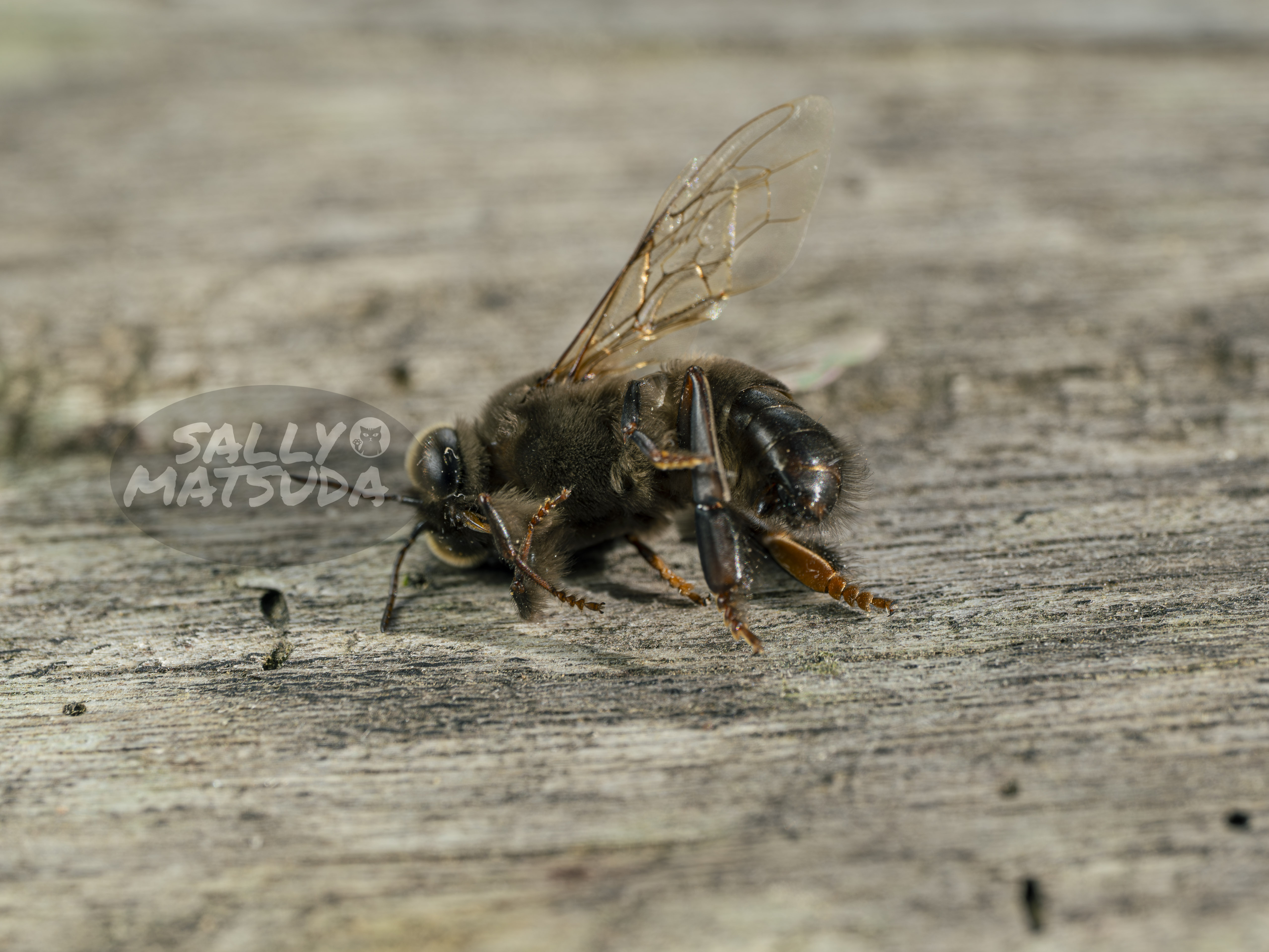
So, can I domesticate Apis dorsata?
The short answer is no. I realized that we can never control the movements of these wild, migratory bees. Nature holds mysteries we cannot fully explain. In the Pedu forest, out of all the Tualang trees standing, the colonies repeatedly return to only two specific trees every single flowering season, completely bypassing the rest. No one fully understands why they choose those exact trees, but it shows just how selective and deeply connected they are to their environment.
Instead of trying to force them into a wooden box, our real job is to protect what they have already chosen. We need to safeguard those remaining Tualang trees that they rely on, care for the health of our tropical rainforests, and play our part in minimizing climate change across their entire range. We cannot control them, but we can make sure their home is still standing when they return. Because for these bees, the whole forest is home.
Cheers
Sally Matsuda

