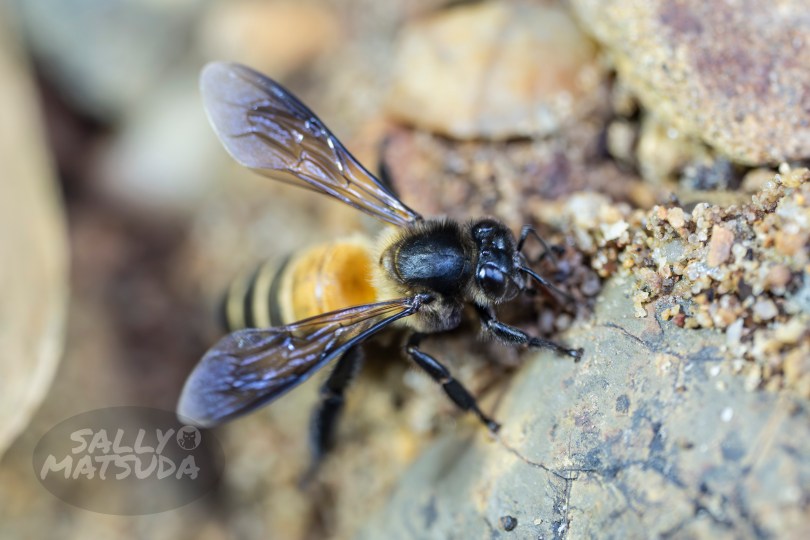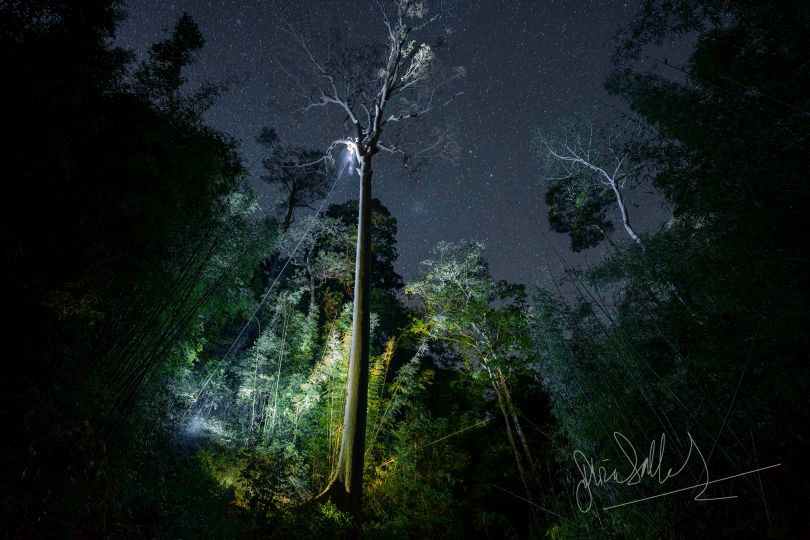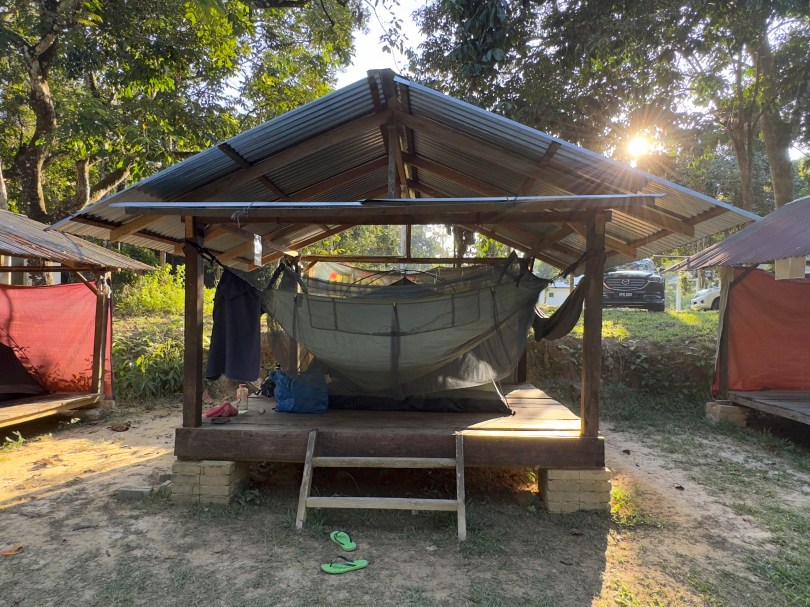
Standing in the middle of the forest in the dark, looking up at a towering Tualang tree, I suddenly felt lost.
I had prepared for this. I had a long checklist in my head of what to photograph, what to look for and which moments I should focus on. I had imagined the pictures long before I arrived. But standing there at 3 a.m., everything looked and felt different. Nothing was happening the way I had pictured it back home.
I was the only photographer among the team. There was no one beside me to ask, “Did you get this?” or “Don’t forget to photograph that.” There was just the tree, the harvesters, the bees and a whole lot of darkness.
And everything was moving.
Someone was preparing the ladders. Someone else was handling the rope. The harvesters were moving from one place to another. The bees were somewhere above us, invisible in the darkness. Voices, footsteps and movement filled the forest.
What should I photograph?
Should I photograph the Tualang tree? Focus on the harvester preparing the ladder? Follow the team handling the rope? Or wait for the moment when the actual harvesting begins?
I stood there with my camera, trying to make a decision before the moment disappeared.
And then I realised something.
Taking still photographs in a situation like this is very different from shooting video. With video, you can let the camera keep rolling and allow the story to unfold. With a still camera, you have to decide.
What deserves to be captured?
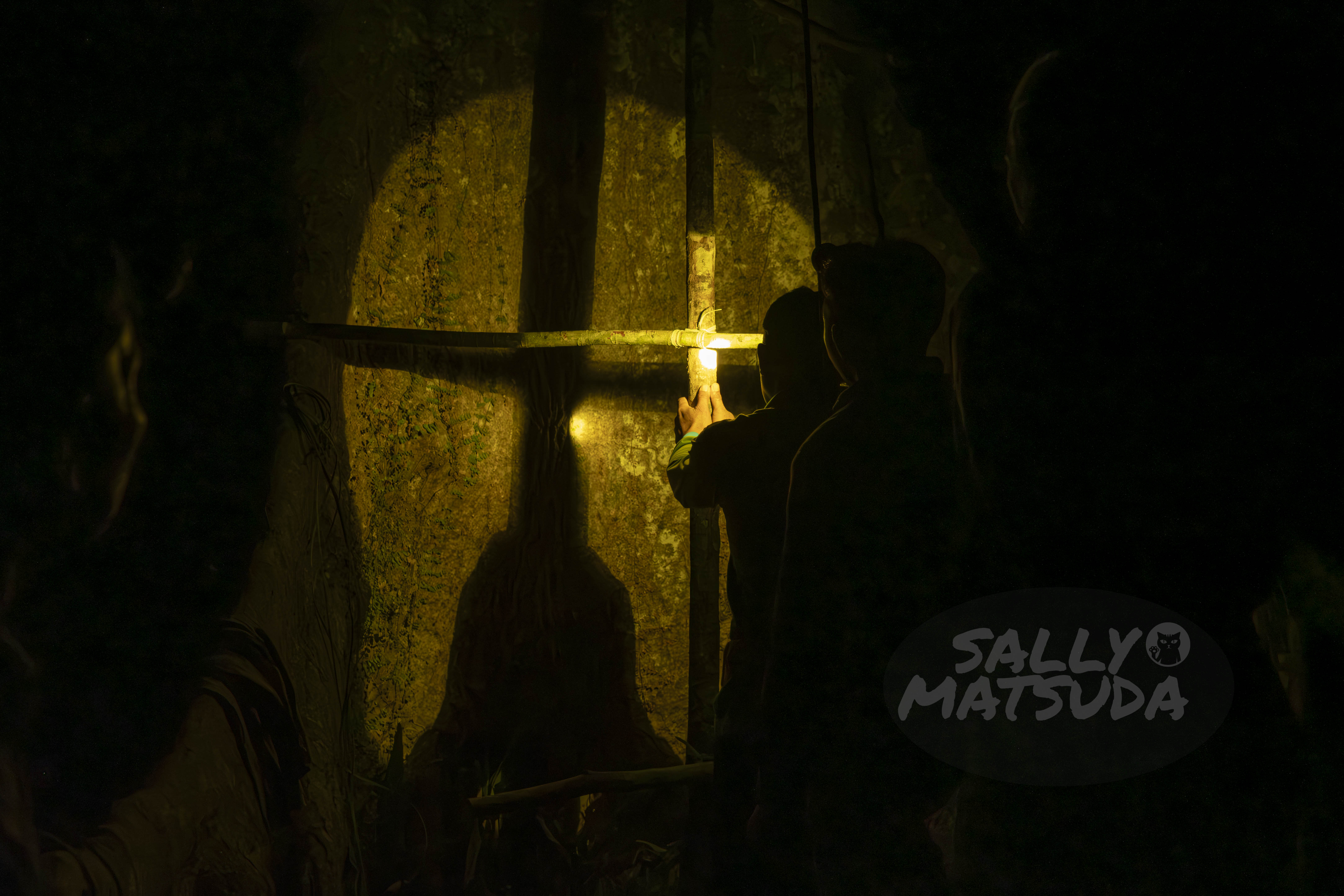
I have been documenting this process since 2019. Each time I entered the forest during the harvesting season, I thought I was well prepared. My checklist covered almost every possible angle. I knew the place, understood the purpose of the expedition and had already imagined the photographs I wanted to bring home.
But for some reason, once I was in the field, the checklist always became secondary to my intuition.
The forest does not arrange the action neatly in front of my camera. Things happen quickly, sometimes all at once, and sometimes in complete darkness. I have to watch, think and make decisions while everything around me continues moving. I began to realise that documenting a story is not simply about being there with a camera. It is about learning to recognise what matters while it is happening.
And perhaps that is one of the hardest things about photography. We prepare by making lists, imagining compositions, studying references and picturing the final image in our heads. But once we arrive, reality rarely follows the script.
People move. Light changes. Moments disappear. Something unexpected happens somewhere behind you. Suddenly, photography becomes less about finding the picture you planned and more about noticing the picture that is actually there.
That night at the Tualang tree became a lesson in that difference. I was no longer just trying to photograph a honey harvest. I was trying to understand what the story was asking me to see.
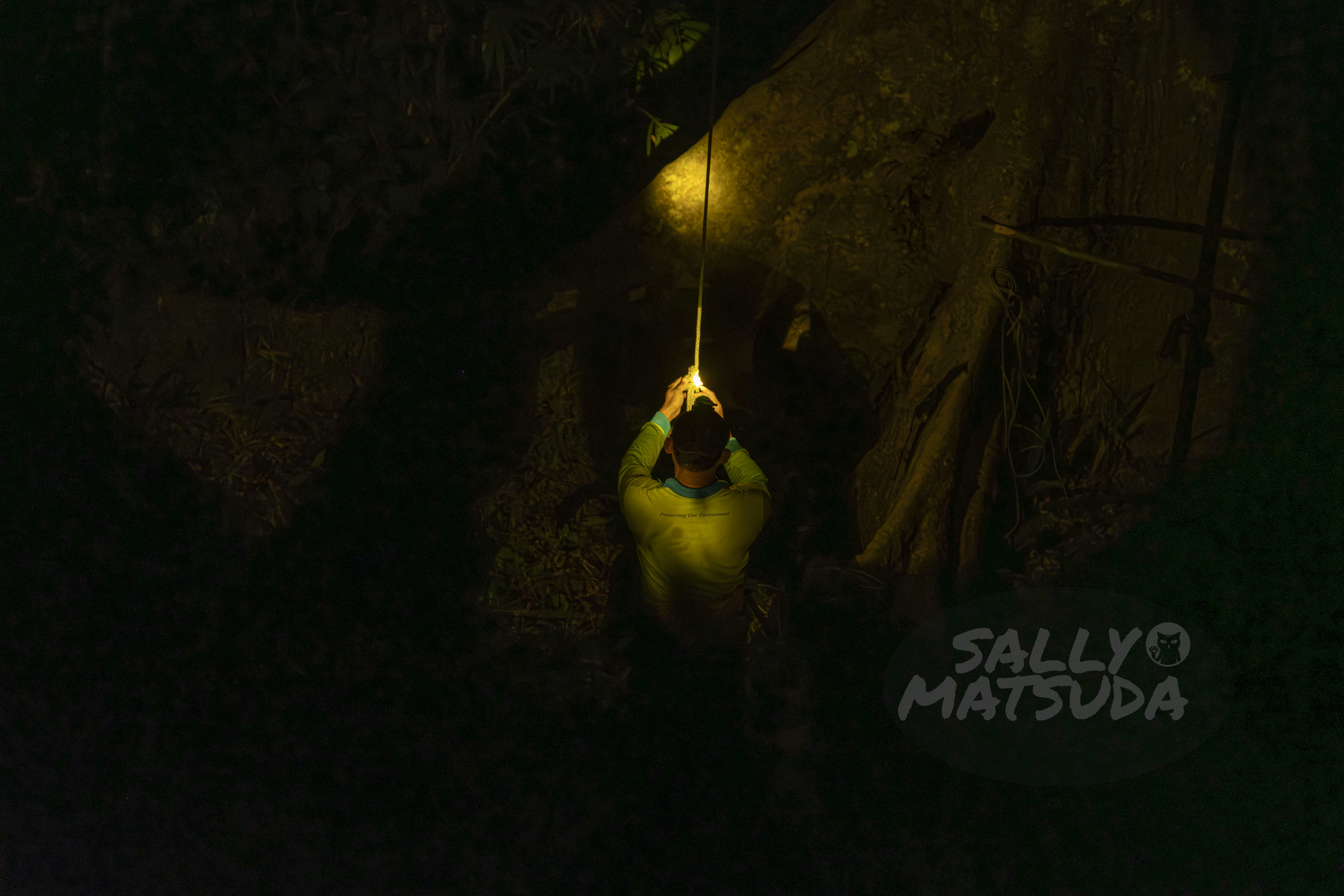
My checklist was focused on the intensity of the work. I wanted to photograph the old ladder being replaced, the preparation of the tools, the ember sparks and, eventually, the harvest itself. These were the moments I had imagined before entering the forest. But replacing the ladder alone would take almost two nights. The harvesters worked their way up from the bottom of the tree, replacing the old ladder section by section until they reached the branches high above.
There was no dramatic action happening every minute. Much of the time was spent preparing, waiting, checking and working through one small task after another. And this was when I found myself putting the camera down.
Instead of photographing, I started observing.
I listened to the team members talking and sharing their stories. Watched how they worked with one another and slowly began to understand the process beyond what I could see through my camera. I also began to notice something that had never appeared on my checklist.
The respect and manners of entering the forest.
I saw the teamwork and trust that had developed over years of working together. Before beginning a stage of the work, I watched them gather and pray. I observed how they prepared themselves, how they dealt with setbacks and how they carried on when something did not go according to plan. There was a rhythm to the way they worked, paused, prepared and continued.
None of this was part of my original plan.
The longer I stayed, however, the more I realised that these small moments were part of the story too. The harvest was not simply about climbing a Tualang tree and collecting honey. It was also about the people, their beliefs, their relationship with one another and their place within the forest. There were rituals, patience, teamwork and emotions woven into the process.
So my checklist began to change.
I started looking for the moments between the moments.
The prayer before the work. The quiet concentration before a difficult task. The frustration when something went wrong. The relief when a problem was solved. The way one person helped another without being asked.
But photographing these moments was much harder than I expected.
It is easy to photograph someone climbing a ladder when the action is obvious. It is much harder to photograph what lies beneath that action.
How do you show respect? How do you convey patience? How do you photograph a ritual without making it feel staged?
I realised that documenting emotions and rituals required more than simply being ready with a camera.
First, I had to understand what I was looking at. Only then could I begin to recognise the moments that might tell the story. But understanding a moment and turning it into a photograph were two different challenges. I could not capture everything at once, especially on my own. I needed time and space to concentrate.
I had to change my strategy.
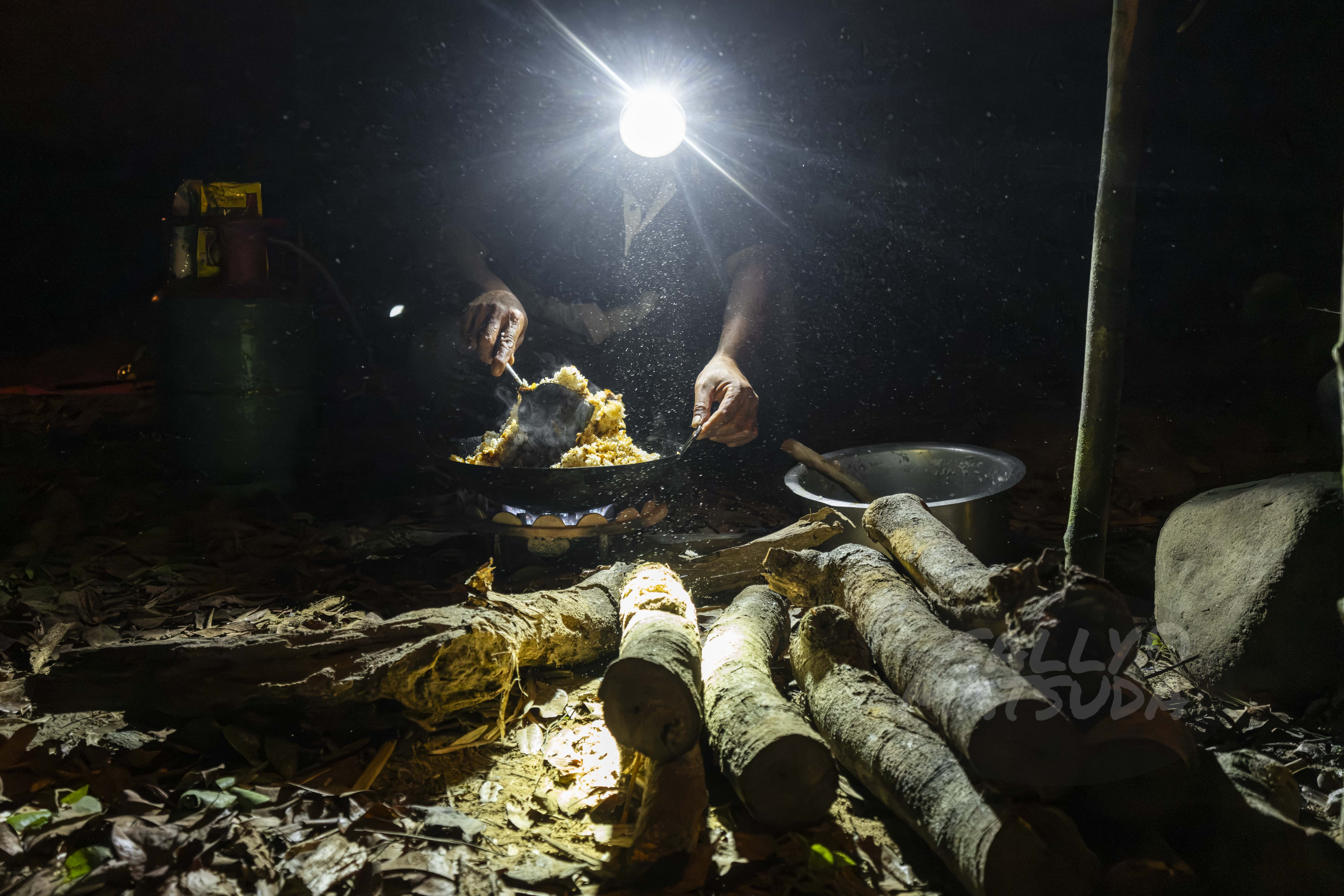
Instead of trying to photograph the entire process flow in one night, I decided to focus on one process at a time. I had to stop being greedy. There was simply too much happening.
So I began to slow down.
If the team was working on the ladder, I stayed with the ladder. If they were preparing for the harvest, I stayed with that process. I stopped jumping from one activity to another just because something else was happening somewhere behind me.
For the first time, I allowed myself to get physically closer with the team. I even asked the team to slow down whenever they noticed my camera pointed towards them. I did not want them to stop or pose. I just needed a little more time to follow their movement with my camera.
That small request changed the way I photographed them.
And when I moved closer, I started noticing things I had missed before. Their hands while preparing the ladder. The concentration on their faces. Their feet carefully finding their way up the ladder. The small gestures between team members as they worked. And then, after all those hours of preparation, the joyful faces when the honeycombs finally came down.
These were not the big moments I had originally written on my checklist. They were small pieces of the story.
I also started paying more attention to the light. In the darkness of the forest, the headlamps became my moving pockets of light. Wherever the light fell, a small part of the story appeared. A pair of hands. A face. A ladder. A honeycomb. And beyond that small circle of light, almost everything disappeared into darkness.
So I moved slowly.
I watched where the light was going. I watched what the harvesters were doing. I waited for the right moment and moved closer when I needed to. I stopped trying to photograph the whole story. Instead, I began photographing it one piece at a time.
One process. One moment.
One story at a time.
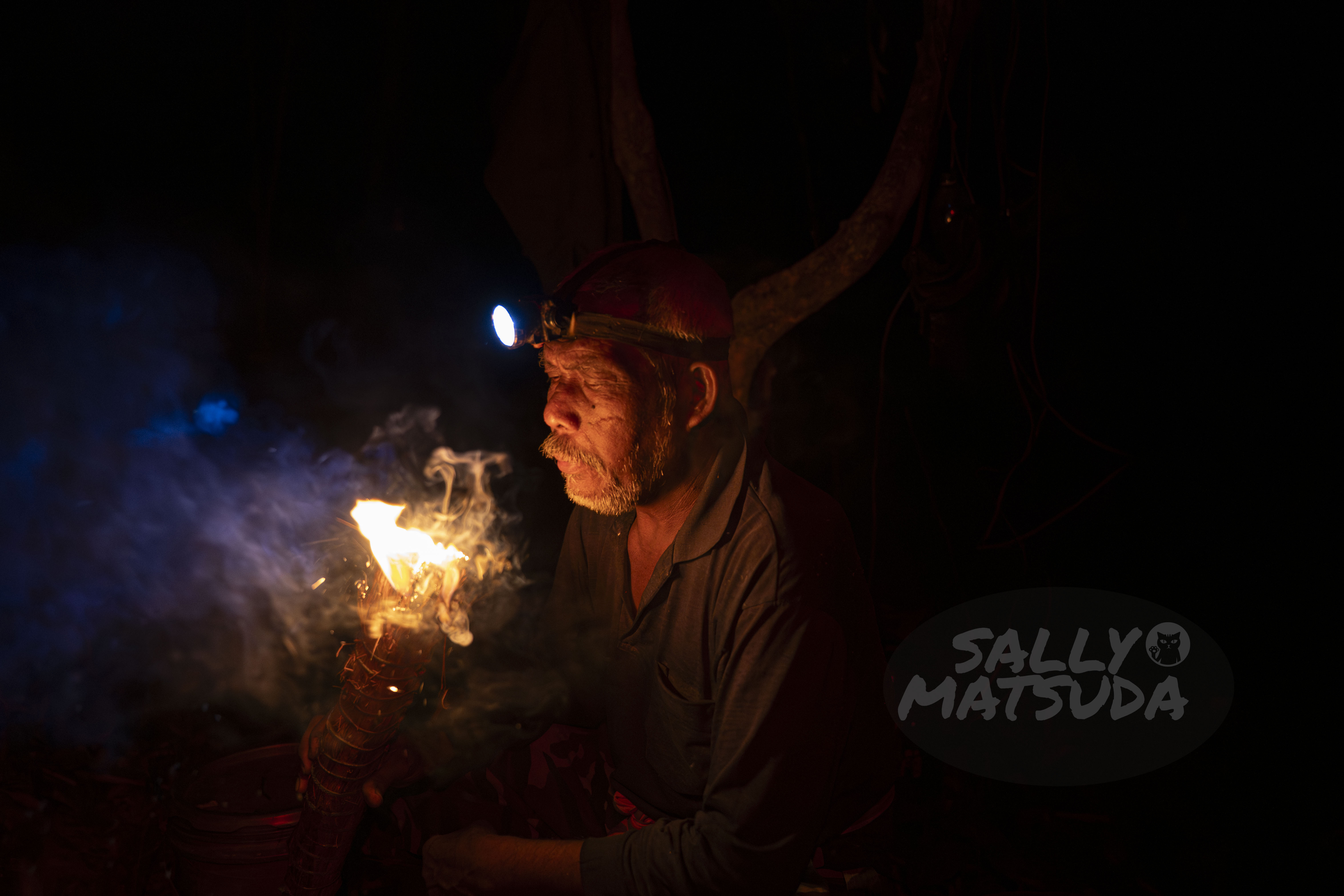
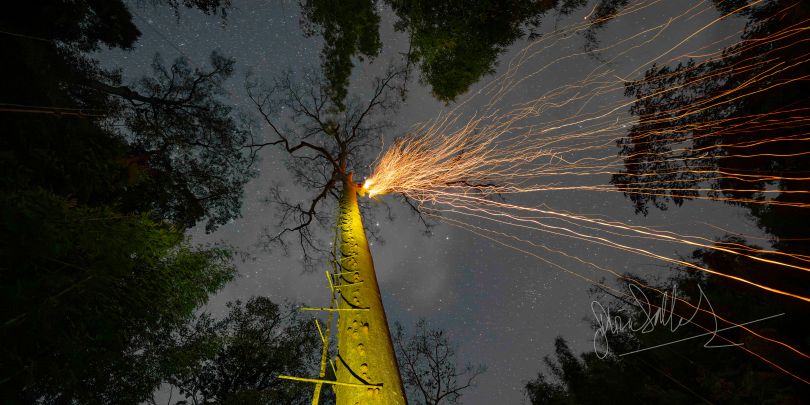
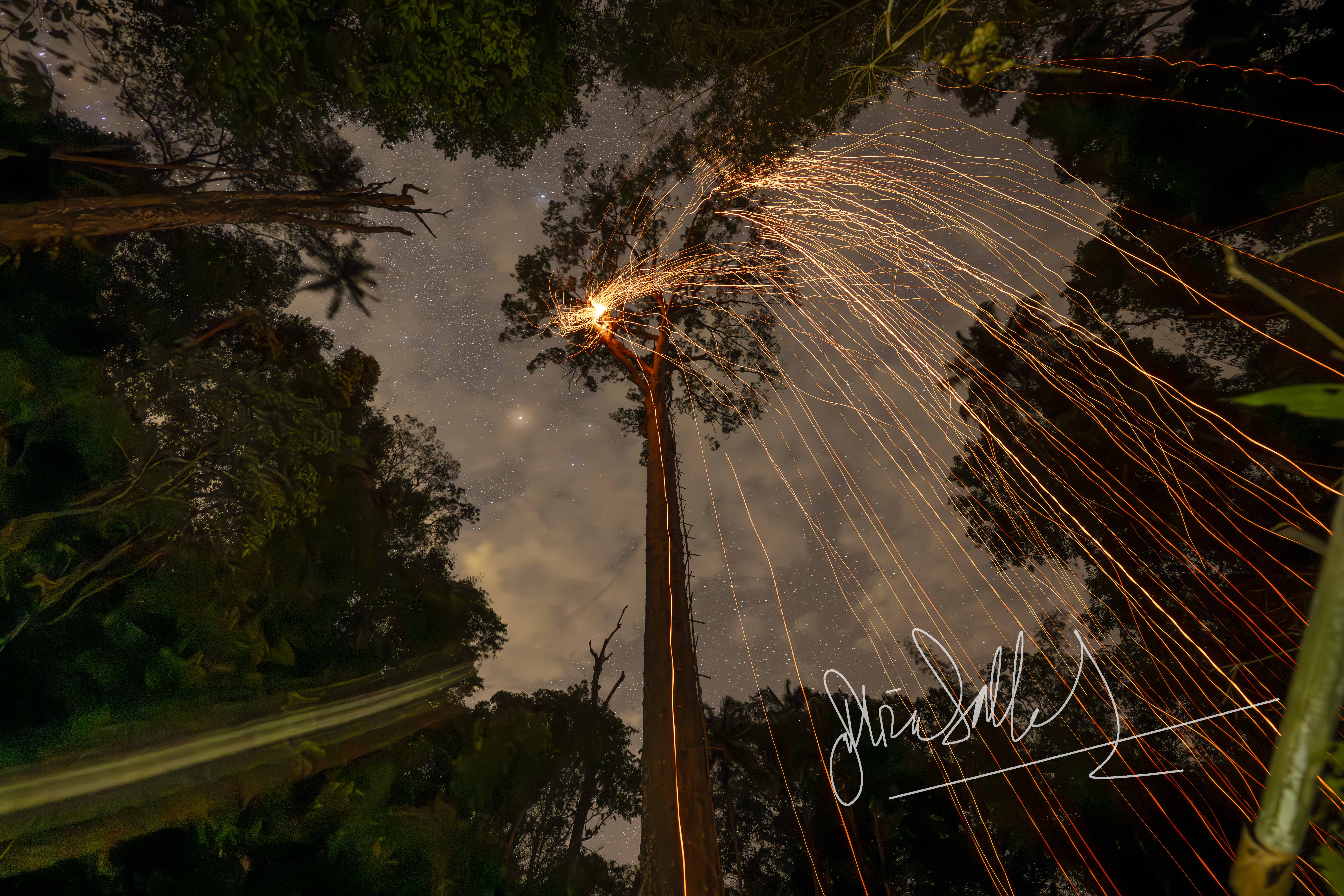
The peak of the process came when the harvester lit the mentawan torch and began striking it against the branches of the Tualang tree. The burning wood released a shower of glowing embers, each spark moving through the darkness as the harvester coaxed the bees to follow the falling light.
This was the moment I had been waiting for.
I wanted to portray the beauty of this traditional harvesting method, practised for more than 50 years, in a way that would draw people into the story. I wanted them to appreciate the forest, understand the role of the bees and develop a deeper respect for the harvesters.
The ember sparks were the visual centrepiece I had in mind.
But I knew I could not simply point my camera at them and hope for the best. Every movement of the embers created a different pattern of light. One strike produced a short burst. Another sent the sparks flying across the frame. Some curved through the darkness while others disappeared almost immediately.
Nothing could be repeated.
Nothing could be staged.
So I stopped everything else and concentrated on the rhythm of the light. I listened to the harvesters calling to the bees:
“Turun, hitam manis, dengan cahaya bintang.” Come down, sweet black ones, with the light of the stars.
For this part of the story, I had one camera set up on a tripod with a slow shutter speed, ready to capture the embers as trails of light. My second camera was for everything happening around the tree.
I had to make that decision before the action began. Once the sparks started flying, there was no time to change my mind. I watched the movement. I watched the direction of the sparks. I watched how long they stayed in the frame.
And I kept shooting. The longer I watched, the more I realised that I was no longer trying to capture the ember itself.
I was trying to capture its movement.
The rhythm. The energy. The relationship between the fire, the tree, the harvester and the darkness surrounding them.
I wanted the photograph to convey something beyond the physical appearance of the sparks. I wanted the light to tell a story of movement, tradition and the people who had kept this practice alive.
This was perhaps the clearest example of what I had been learning throughout the expedition. Noticing gave me something to look at. But photography still required me to make a decision. That night, I decided to follow the light.
One movement at a time. One frame at a time.
As I sit at my computer now, I still wonder whether I have managed to tell the story I wanted to tell.
The visual documentation is not complete. I have another visit planned for the next harvesting season, another opportunity to return to the forest and continue documenting a process that has been practised for more than 50 years. There is still so much I want to understand, observe and photograph.
I am beginning to realise that visual storytelling involves far more than collecting photographs. It requires constant thinking, observing, selecting and deciding.
What should I include? What should I leave out? Which moments will help someone who has never been to this forest understand what happens here, and perhaps appreciate the people, the bees and the forest a little more?
I do not have all the answers yet.
I used to think photography was about seeing. Now I think seeing is only the beginning.
The real challenge is noticing.
And after noticing, deciding what matters enough to keep. Maybe that is where the photograph begins.
I hope.
Cheers,
Sallymatsuda